Shiatsu is a Japanese form of bodywork whose name simply means finger pressure, though that undersells it a little. Rooted in the same traditional understanding of the body as acupuncture, it works with gentle pressure, stretches and holds along the body's energy channels to ease tension, settle the nervous system and restore a sense of balance. Unlike a brisk sports massage, it is slow, considered and deeply calming — as much a practice as a treatment.
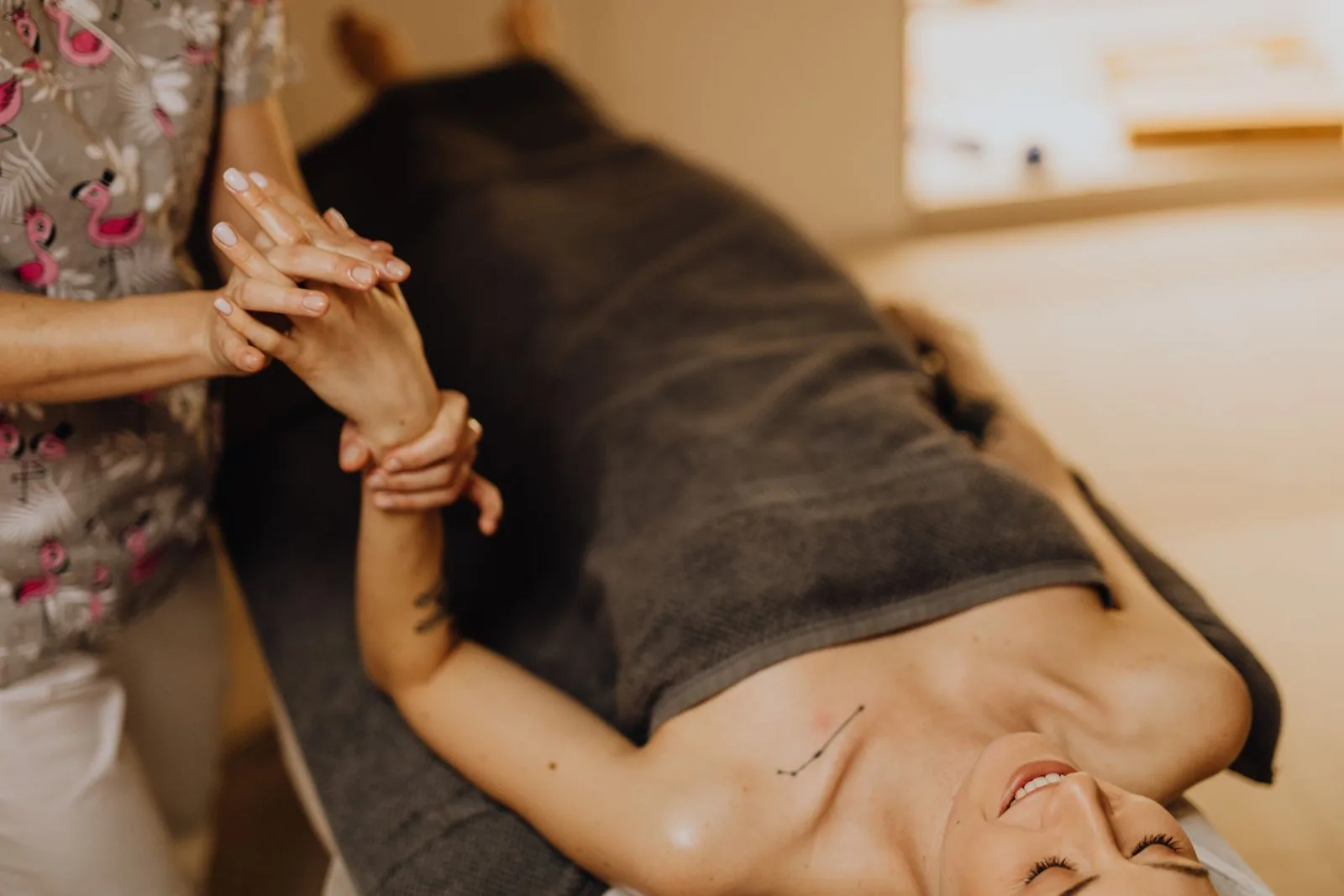
A session is unhurried and fully clothed. You lie on a padded mat on the floor, dressed in something loose and comfortable, while the practitioner works with palms, thumbs and sometimes elbows and knees, leaning their body weight rather than pushing with force. There is stretching and gentle rocking as well as pressure, and the whole thing has a rhythm that many people find almost hypnotic. It is common to drift toward sleep.
It aims at the whole person, not just the sore spot. Practitioners of shiatsu think in terms of energy and balance across the whole body, so a session for a stiff neck might also address the lower back, the breath and the general state of tension you have been carrying. Many people come for one physical complaint and notice, as much as anything, that they simply feel calmer and more themselves afterward. The UK's Shiatsu Society is a good place to understand the tradition and find a registered practitioner.
It suits people who carry their stress in their body. If you hold tension in your shoulders, sleep badly in stressful spells, or simply spend too long at a desk, shiatsu offers a way back into the body that is gentle rather than punishing. It is not a medical treatment and does not claim to cure anything, but as a regular reset for a wound-up system, many find it quietly invaluable.
Come with an open mind and no agenda. The first session can feel unfamiliar — the floor, the slowness, the fully-clothed intimacy of it — but most people relax into it quickly, and the deep calm afterward is what brings them back. Wear comfortable clothes, avoid a heavy meal beforehand, and give yourself a quiet hour afterward rather than rushing straight back into the day.